Anthropic has confirmed plans to open its first dedicated UK engineering hub in Cambridge, planting itself squarely in the heartland of British artificial intelligence and inviting a direct contest with Google DeepMind, ARM and a dense cluster of university spinouts for some of the world’s most sought-after researchers. The decision marks a significant escalation in the company’s international footprint, and signals that the UK’s AI ecosystem is maturing from a US satellite outpost into a genuine front line in the global hunt for technical talent.
The Cambridge office, expected to open in stages through the coming year, will focus on safety-critical research — particularly interpretability and alignment — rather than serving as a sales or commercial beachhead. That focus matters. It positions Anthropic to compete for precisely the kind of specialist whom DeepMind has spent more than a decade cultivating just a short train ride away in London and on its own Cambridge research links.
Why Cambridge, and Why Now
Cambridge is no accidental choice. The city sits at the centre of a remarkably concentrated talent pipeline: the University of Cambridge’s machine learning groups, the long shadow of ARM’s chip-design dominance, and a steady churn of doctoral researchers who increasingly view alignment and interpretability as the field’s most intellectually serious problems.
For Anthropic, whose public identity is built around safety-first AI development, the symbolism is deliberate. The company has historically pulled UK-based researchers across the Atlantic to its San Francisco operations. A local hub flips that dynamic — offering British talent a way to work on frontier models without uprooting their lives.
“For years the deal was simple: if you wanted to work on frontier interpretability, you moved to the Bay Area or you joined DeepMind,” said Dr Helena Marsh, an AI policy researcher at the fictional Institute for Computational Governance. “Anthropic opening in Cambridge breaks that binary. It gives people a third door, and it’s right on DeepMind’s doorstep.”
The timing also reflects a broader recalibration. With UK government keen to position Britain as a hub for trustworthy AI following the Bletchley Park summit and subsequent safety institute work, a high-profile American lab establishing safety research locally is a politically welcome development — and one Anthropic is unlikely to have overlooked.
A Regional Talent War Intensifies
The immediate consequence is competitive heat. Interpretability and alignment specialists are scarce, and the pool of researchers capable of doing world-class work in these areas numbers in the low hundreds globally. Concentrating two of the most prestigious employers in the same city all but guarantees aggressive recruitment.
That competition is likely to push compensation, equity packages and research autonomy upward — good news for individual researchers, more complicated for the smaller startups and academic labs that struggle to match it.
- Salaries and equity: Direct rivalry tends to inflate offers, particularly for senior staff with published interpretability work.
- Academic drain: University groups may find it harder to retain post-docs lured by industry pay and compute access.
- Knowledge spillover: A dense cluster can accelerate the field as researchers move between organisations, carrying ideas with them.
“There’s a genuine tension here,” noted Tom Iyer, a fictional analyst at advisory firm Northgate Technology Partners. “Clustering accelerates innovation, but it also cannibalises the very academic base that produces these people in the first place. Cambridge could win and lose at the same time.”
What It Means for DeepMind and ARM
For DeepMind, the arrival of a credible safety-focused rival on home turf removes a measure of comfort. The Alphabet-owned lab has long enjoyed near-default status as the destination for UK alignment talent. That advantage now faces erosion, not from a distant competitor but from one renting office space nearby.
ARM, while operating in a different layer of the stack, is part of the same talent ecosystem — and the broader signal is that Cambridge’s gravitational pull is strengthening. A thicker cluster tends to attract still more investment, more spinouts and more researchers, reinforcing itself over time.
There are risks. Critics warn that an over-concentration of frontier AI work in a single city could entrench inequality within the UK’s tech sector, leaving regions outside the so-called golden triangle of London, Oxford and Cambridge further behind.
What This Means
Anthropic’s Cambridge hub is more than a real-estate decision — it is a statement that Britain’s AI talent is worth competing for on its own soil. The move turns the UK cluster from a feeder system for American labs into a contested arena where the world’s leading safety researchers can be courted, retained and challenged locally. For DeepMind, the era of comfortable home advantage is over; for the broader ecosystem, the coming year will test whether intensified rivalry accelerates progress or simply inflates the price of a finite pool of talent. Either way, Cambridge has just become a great deal more interesting.
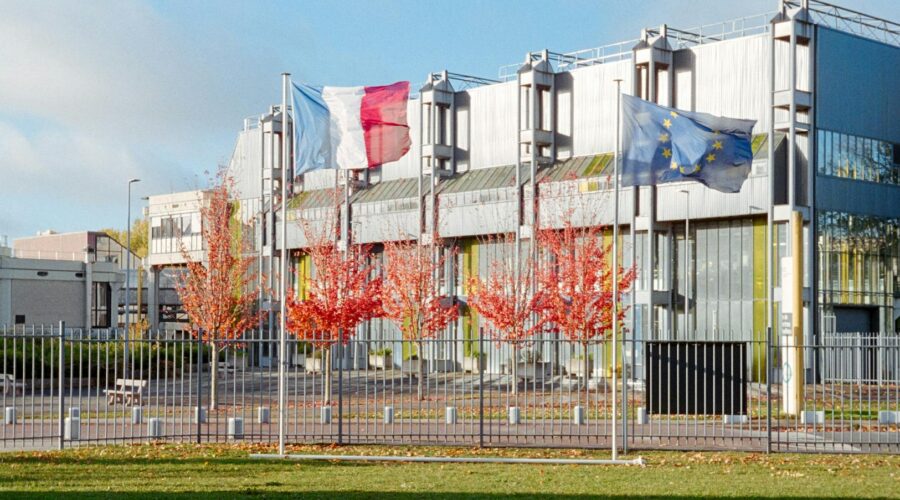
Photo by Bingqian Li on Pexels