The Bank of England has quietly begun testing an artificial intelligence ‘stress-test agent’ capable of simulating market shocks across the balance sheets of Britain’s largest lenders in near real time, in what could become the most significant overhaul of bank supervision since the financial crisis. The pilot, run by the Bank’s Prudential Regulation Authority (PRA), aims to move beyond the laborious annual stress-testing cycle towards a system that continuously probes for vulnerabilities. But the experiment is already drawing sharp warnings from risk specialists who fear that an opaque model could share the very blind spots of the firms it is meant to police.
From Annual Ritual to Continuous Probing
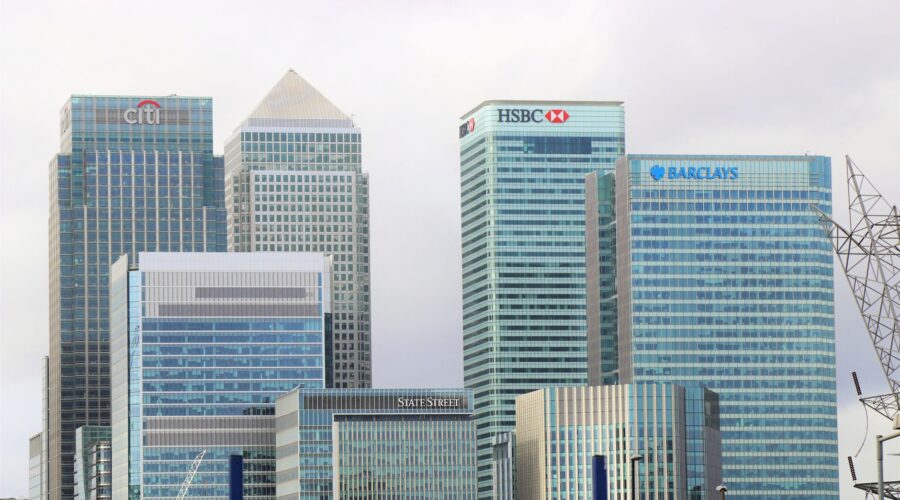
Since 2014, the PRA’s concurrent stress tests have been a fixture of the British financial calendar. Each year, banks including Barclays, HSBC, Lloyds and NatWest are handed a detailed adverse scenario — a sharp recession, a property crash, a spike in unemployment — and asked to model the impact on their capital over a multi-year horizon. The process is rigorous but slow, often taking the better part of a year to design, run and publish.
The new agentic model, understood internally to be referred to as a ‘stress-test agent’, is designed to compress that timeline dramatically. Rather than waiting for a single annual scenario, the system generates and runs thousands of hypothetical shocks against supervisory data feeds, flagging combinations of exposures that breach capital thresholds. According to people familiar with the pilot, the agent can autonomously construct novel scenarios — chaining together, say, a gilt sell-off, a counterparty default and a liquidity squeeze — that human analysts might not think to combine.
“The appeal is obvious,” said Dr Priya Nandakumar, a financial-stability researcher at the Centre for Macroprudential Studies. “Risk doesn’t politely wait twelve months between tests. An agent that can interrogate balance sheets daily and surface emerging fault lines is a genuine leap. The question is whether we can trust what it tells us.”
How the Agent Works
Unlike a conventional statistical model, an agentic system is given a goal — in this case, finding scenarios that threaten solvency — and the latitude to pursue it through iterative reasoning. The agent draws on supervisory returns, market data and historical loss experience, then proposes shocks, evaluates the modelled outcomes, and refines its search towards the most damaging plausible paths.
The PRA is said to be running the system in ‘shadow mode’ alongside the traditional 2025 stress test, comparing the agent’s findings against the official results before deciding whether to give it any formal role. A Bank spokesperson confirmed only that it was “exploring how advanced analytical tools, including machine learning, can strengthen our supervisory toolkit,” adding that “any deployment would be subject to rigorous validation and human oversight.”
Supporters argue the approach could catch the kind of correlated, system-wide risks that static scenarios miss. The 2022 gilt-market turmoil and the 2023 collapse of Silicon Valley Bank both unfolded faster than any annual exercise could have anticipated, exposing the limits of point-in-time supervision.
The Blind-Spot Problem
Yet it is precisely the agent’s sophistication that worries critics. Modern banks increasingly rely on similar machine-learning tools to model their own risk. If the regulator’s agent is trained on overlapping data and assumptions, sceptics warn, it may simply reproduce the industry’s collective blind spots — failing to imagine the very shocks that everyone has discounted.
“The whole point of a stress test is adversarial. You want a model that thinks differently from the firms,” said Tom Bridgewater, a former bank risk officer now advising at fintech consultancy Lattice Partners. “If the supervisor and the supervised are running cousins of the same architecture, you get a comforting consensus right up until the moment everything breaks at once.”
There are also concerns about explainability. Annual stress tests are deliberately transparent: the scenario is published, the methodology scrutinised, the results debated in Parliament. An autonomous agent generating scenarios through opaque reasoning could undermine that accountability. “If a bank is told it needs more capital because an AI flagged a risk, it is entitled to ask why,” Dr Nandakumar noted. “‘The model said so’ is not an acceptable answer for a regulator wielding statutory power.”
Critics point to a deeper governance gap. Regulators worldwide have spent two years cautioning banks about deploying AI in critical functions without robust controls. Deploying an agentic model at the heart of supervision would invite obvious questions about whether the watchdog is held to the same standard it sets for the industry.
What This Means
The PRA’s experiment signals that even the most cautious corners of financial regulation are now reckoning with agentic AI — and the trade-off it forces between speed and scrutiny. A continuous, intelligent stress-test agent could give Britain’s supervisors an early-warning system far sharper than today’s annual ritual, catching the cascading risks that have repeatedly outpaced human oversight. But unless the Bank can prove its model thinks independently of the firms it polices, and can explain its reasoning to those it regulates, the tool risks institutionalising a shared false confidence. For now, the agent remains in the shadows of a parallel test — and whether it graduates to a frontline role will depend less on its cleverness than on whether the Bank can make it trustworthy.
Photo by Expect Best on Pexels